19 March 2025
Picture-perfect Virtual Tours: the value of advanced photo retouching
How advanced photo retouching improves consistency, lighting and clarity in 360° images for Virtual Tours of showrooms, hotels, museums and business spaces.
Image quality is an essential part of a 360° Virtual Tour: colour, exposure and visual clarity help represent a space consistently and professionally. Panoramic captures can nevertheless include reflections, camera shadows, uneven lighting or elements unrelated to the intended setting. Advanced photo retouching addresses these aspects after capture according to the characteristics and objectives of each project.
Why is photo retouching important in Virtual Tours?
A 360° panorama includes every direction within a space. Mirrors, glass and glossy surfaces can reveal the camera or operator; moving people and misplaced objects can distract attention; different lighting conditions between rooms can make the visit feel inconsistent. Post-production can correct these issues while preserving a natural representation.
Editing 360° images
Consistent colour and lighting
Adjusting exposure, contrast and colour balance helps maintain visual consistency as visitors move between the different panoramas in the tour.
Correcting reflections and shadows
When the camera or operator appears in mirrors, glass or glossy surfaces, retouching can reduce or remove these elements to avoid distractions during navigation.
Removing unwanted elements
Depending on the project, people, temporary objects or unrelated logos present during capture can be edited so that attention remains on the space and its intended setup.
Consistency with the brand identity
Post-production can align the images with the way a brand presents its environments and products without turning the tour into an artificial representation of the space.
Applications across different sectors
- Real estate: presenting environments clearly and managing differences in lighting.
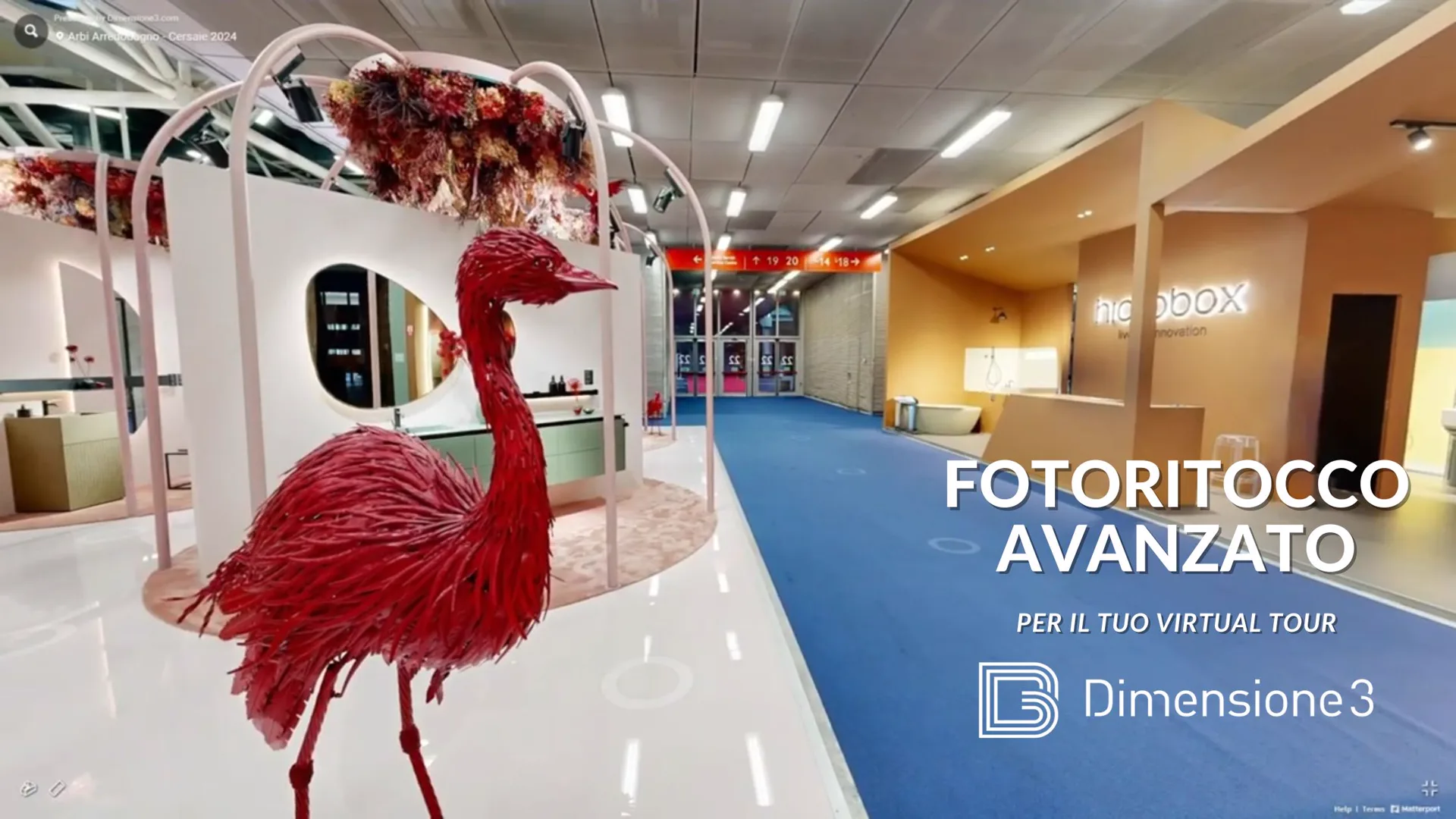
- Trade fairs and showrooms: keeping attention on the stand and displayed products.
- Hospitality: maintaining visual continuity across rooms, shared areas and services.
- Museums and cultural spaces: managing light sources and reflective surfaces while respecting the exhibits.
Photo retouching is one stage in the creation of a photographic Digital Twin. It is assessed together with capture, navigation structure and any interactive content. Explore applications for real estate, hospitality, and culture and museums.
If you would like to assess which adjustments suit your space, tell us about your project.