02 November 2026
Technical manuals connected to Digital Twins: from documentation to operational context
Manuals, procedures, diagrams and corporate documents already contain much of the knowledge required to manage spaces, systems and machinery. The problem is often not a lack of information, but finding the right content and understanding it where it needs to be used.
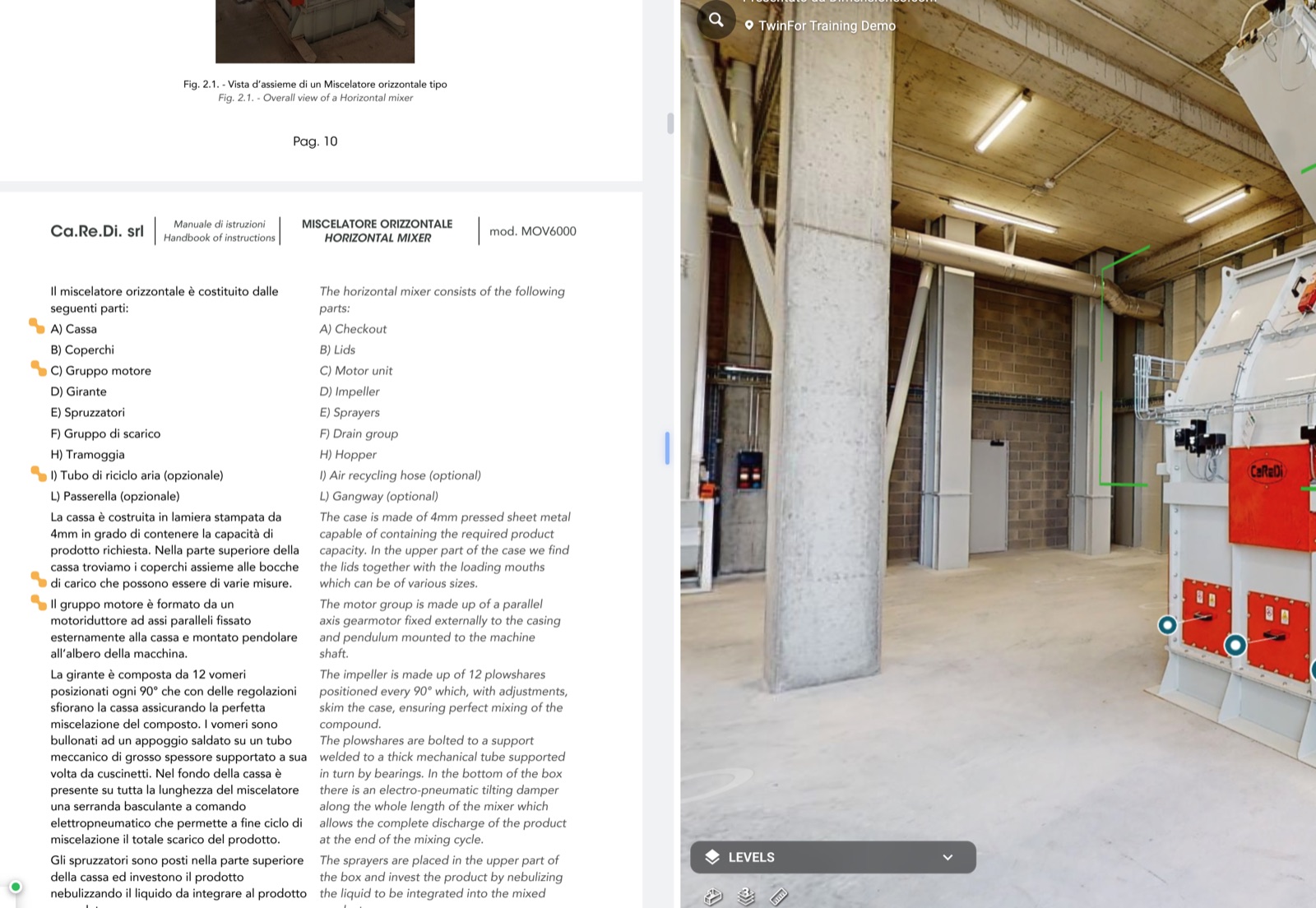
Connecting technical manuals to a Digital Twin adds a visual and spatial dimension to documentation. Information no longer explains only what to do: it also shows where to act and which environment, system or component it refers to.
Why technical manuals are difficult to use in everyday work
In a complex building, a manufacturing plant or on board a vessel, documentation is often distributed across PDFs, shared folders, portals, data sheets, videos and different applications. Even when the content is complete and up to date, users must know the document name, its location and how it is organised.
The distance between a document and its physical context increases search time and makes procedures, diagrams and instructions harder to interpret. A description can be technically correct yet remain abstract until it is connected to the place or component concerned.
The Digital Twin can become the map used to access this knowledge: a navigable representation of the real environment that connects information, spaces and assets.
A two-way relationship between document and space
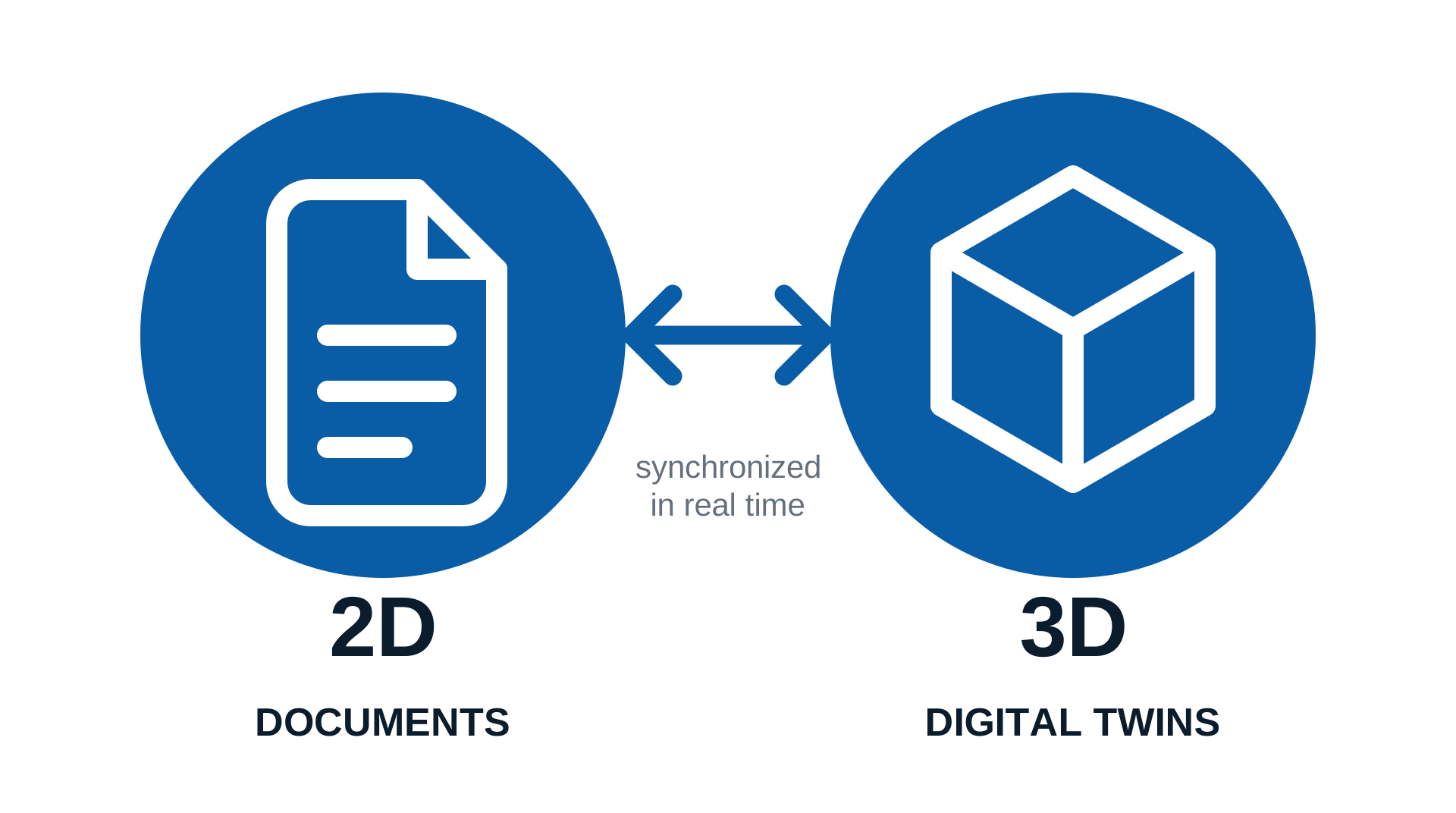
The principle is straightforward: the manual and the Digital Twin are synchronised in both directions.
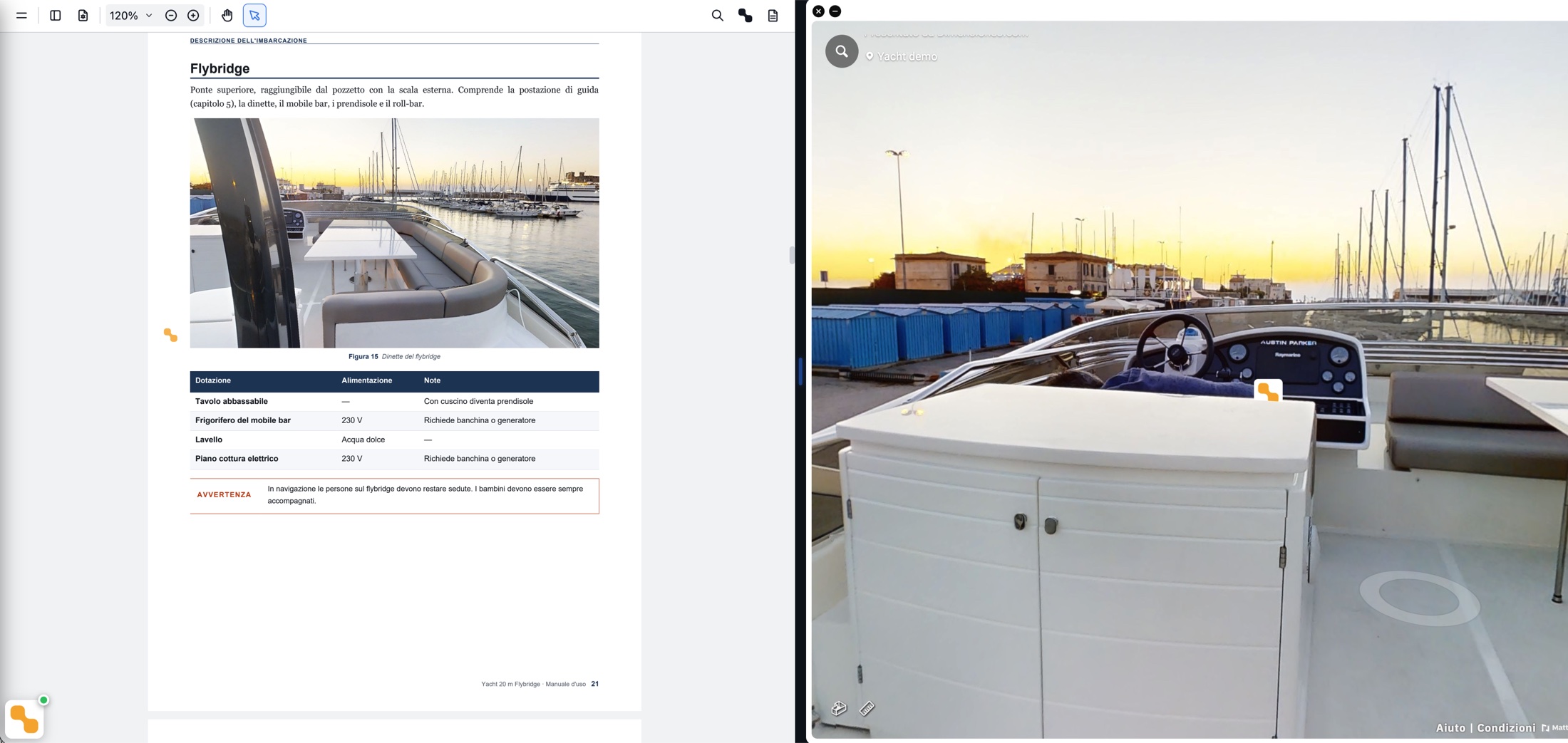
- From the manual to the Digital Twin: selecting a procedure, system or component takes the user directly to the corresponding point in the digitised space.
- From the Digital Twin to the manual: clicking an environment, machine or technical element opens the relevant section of the documentation.
Consultation no longer needs to follow a page-by-page sequence. It can start from the problem to solve, the user's current location or the asset requiring attention.
Building on existing documentation
Connecting manuals to Digital Twins does not require replacing every business tool or rebuilding technical knowledge from scratch. A project can start with existing content: PDF manuals, procedures, safety sheets, drawings, images, videos and web pages.
These materials remain authoritative sources, while the Digital Twin adds a more intuitive access layer. The system can be introduced gradually, beginning with a defined use case, one department or a family of systems and expanding after its value has been demonstrated.
One manual can connect several levels of detail
The same architecture can connect different Digital Twins. From the digital counterpart of a plant, users can enter a department, reach a line, open the Digital Twin of a machine and continue to the component described in the manual.
The journey can follow a practical hierarchy: plant, environment, system, machine, component and procedure. Documentation remains synchronised throughout the experience and accompanies users from the overall view to the technical detail.
Applications in manufacturing, facility management and marine
In manufacturing, a technical manual connected to the Digital Twin can bring together operating procedures, maintenance, safety, system information and machinery documentation. Plant managers, maintenance teams and technicians can start from the environment to identify the relevant content quickly.
In facility management, the building becomes the interface for accessing certifications, building systems, equipment, maintenance records and operational references. The same approach can be applied across real estate portfolios with multiple sites.
In the marine sector, the vessel's digital manual can connect electrical and hydraulic systems, air conditioning, safety equipment, components and procedures to their exact position on board.
From consultation to operational support
When documentation is connected to its context, the manual evolves from an archive into an operational tool. It can support maintenance and service, technical training, contractor onboarding, safety management and knowledge transfer.
Its value does not come from adding another information container, but from connecting what the organisation already knows with the place where that knowledge needs to be applied.
TwinFor Knowledge: the manual synchronised with the Digital Twin
TwinFor Knowledge is the Dimensione3 solution designed to connect technical manuals, procedures and digital content to Digital Twins of buildings, manufacturing plants, machinery and vessels. It can use an existing Digital Twin or include digitisation of the environment.
The objective is to make technical knowledge easier to find, faster to understand and available where it is needed, while building on the documents and processes the organisation already uses.