23 October 2026
Digital Twins and education: when places become part of learning
From industrial training to the classroom: at Didacta Italia 2026, we presented new ways of learning through Digital Twins, connecting books, documents and learning content to physical places.
Beyond 3D: two ways of learning through Digital Twins
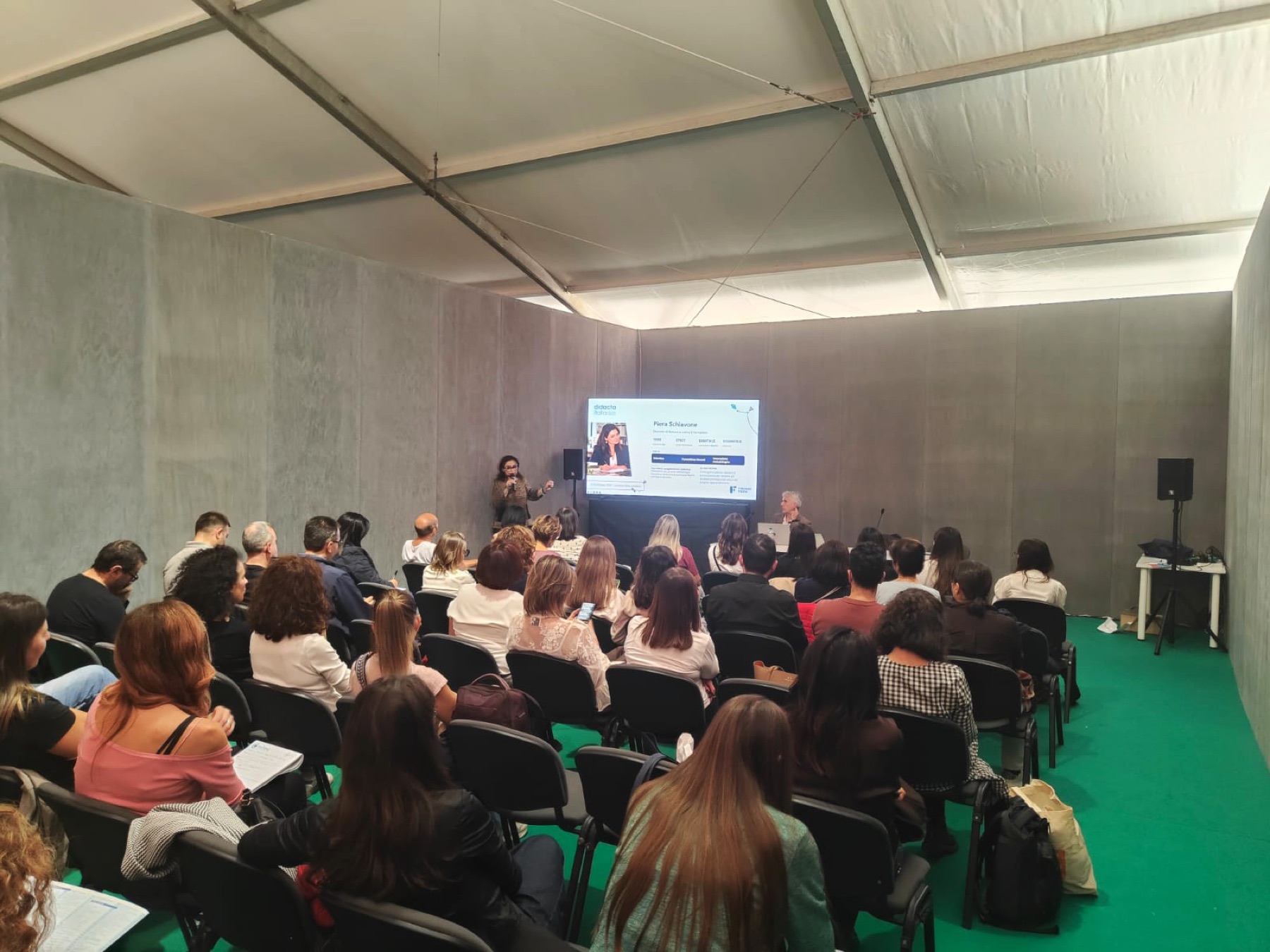
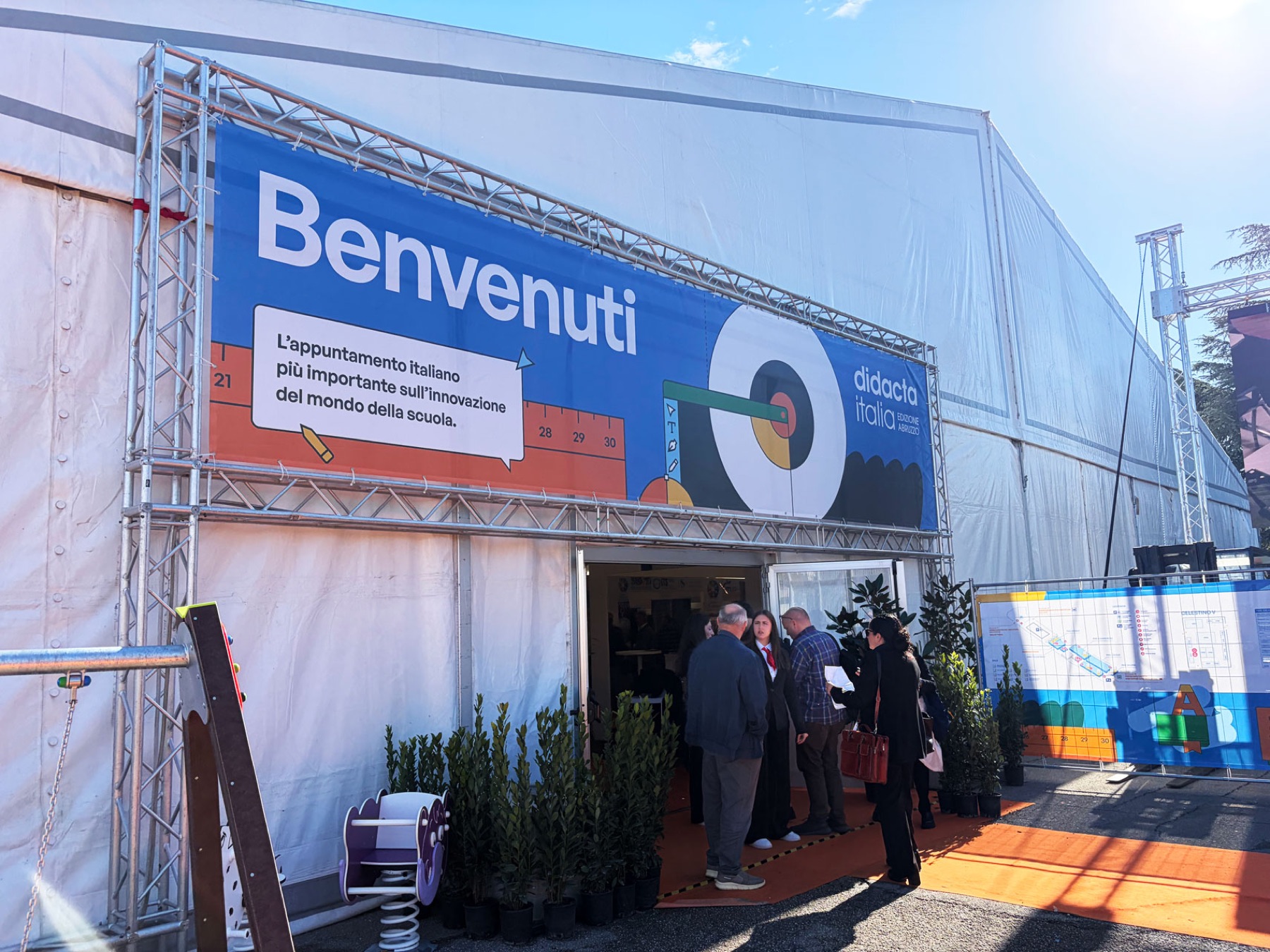
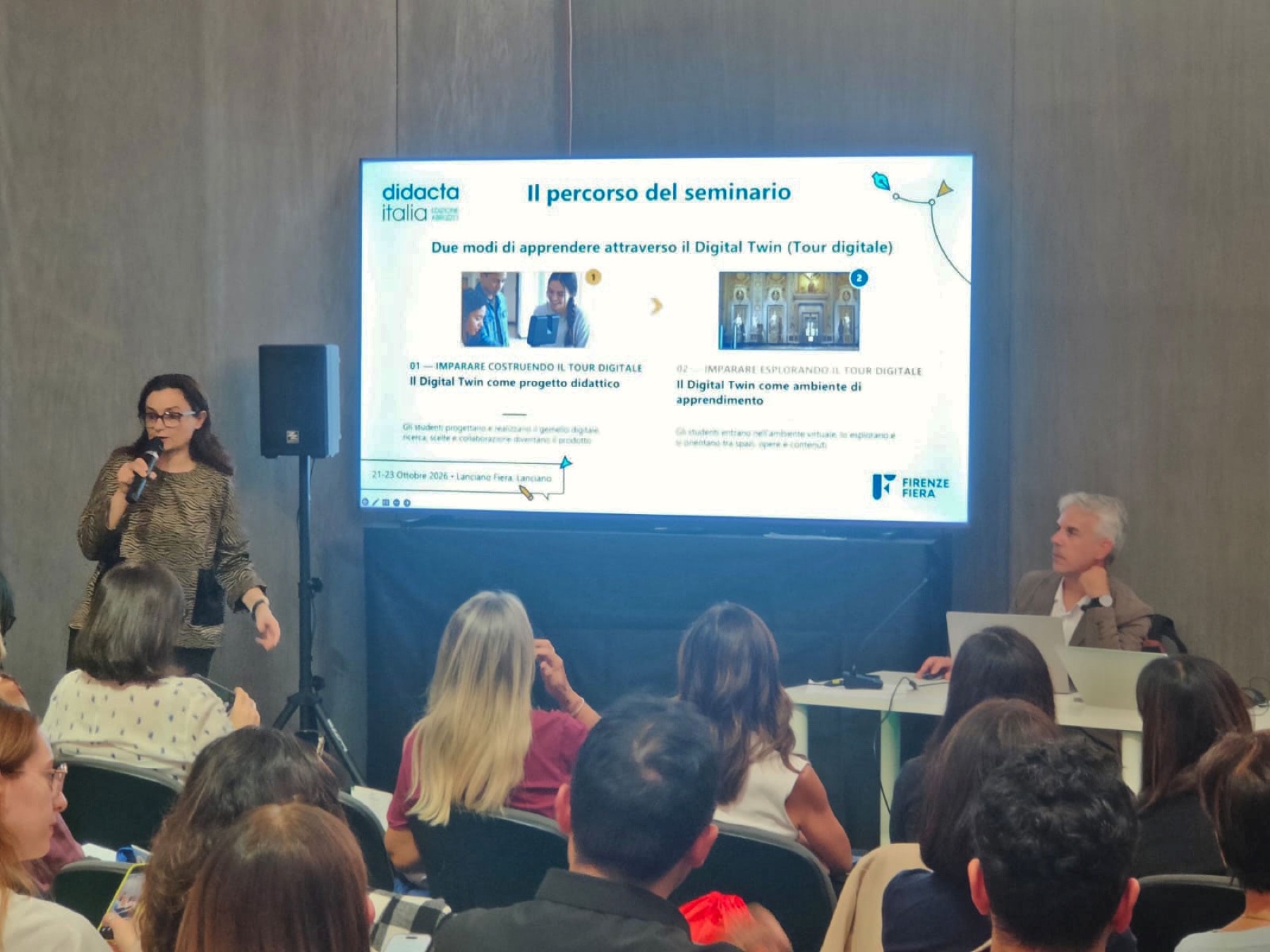
At Didacta Italia – Abruzzo Edition 2026 in Lanciano, Dimensione3 took part in the “Beyond 3D” seminar alongside Professor Piera Schiavone, a teacher of Italian and Latin and an expert in educational innovation.
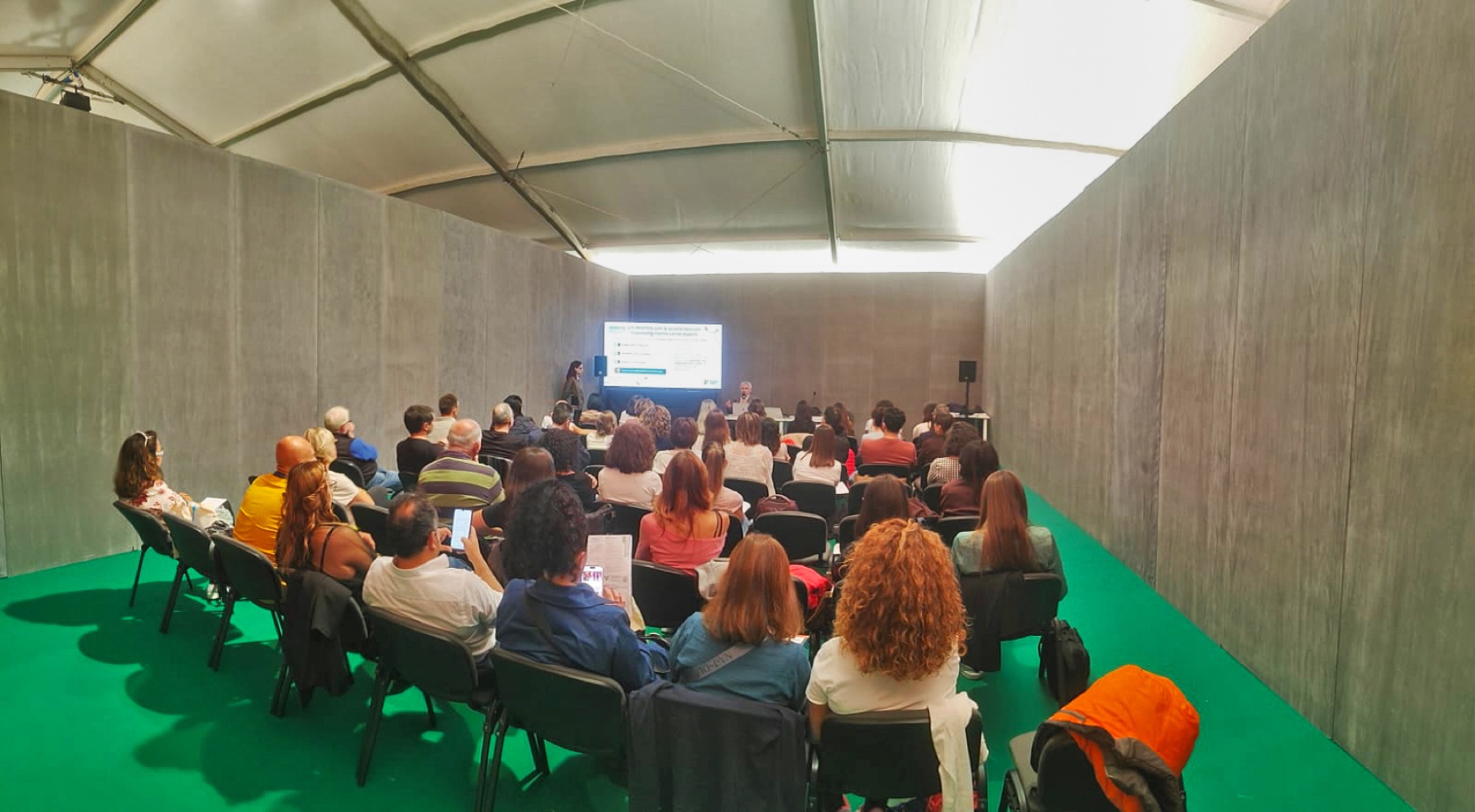
The meeting explored two complementary approaches to using Digital Twins in education: learning by building and learning by exploring.
The first treats the creation of a digital environment as an integral part of an educational project: students take part in research, design, multimedia production and the construction of a shared experience.
The second uses the Digital Twin as a learning environment, where physical places, documents and educational content are connected to create new ways of accessing knowledge.
These are two different perspectives, united by one principle: technology is not an end in itself, but a tool for enabling more participatory and contextual learning experiences.
Learning by building: the Liceo Virgilio experience
A concrete example of the first approach is the project created for the centenary of the “Publio Virgilio Marone” Classical High School in Gioia del Colle, developed with the educational coordination of Professor Piera Schiavone and the technological support of Dimensione3.
The school’s digital tour was designed as a narrative environment in which its spaces become access points to documents, images, videos, testimonials and content created by students.
The experience involved students in research, source interpretation, narrative design and multimedia production, valuing different skills and encouraging collaboration. 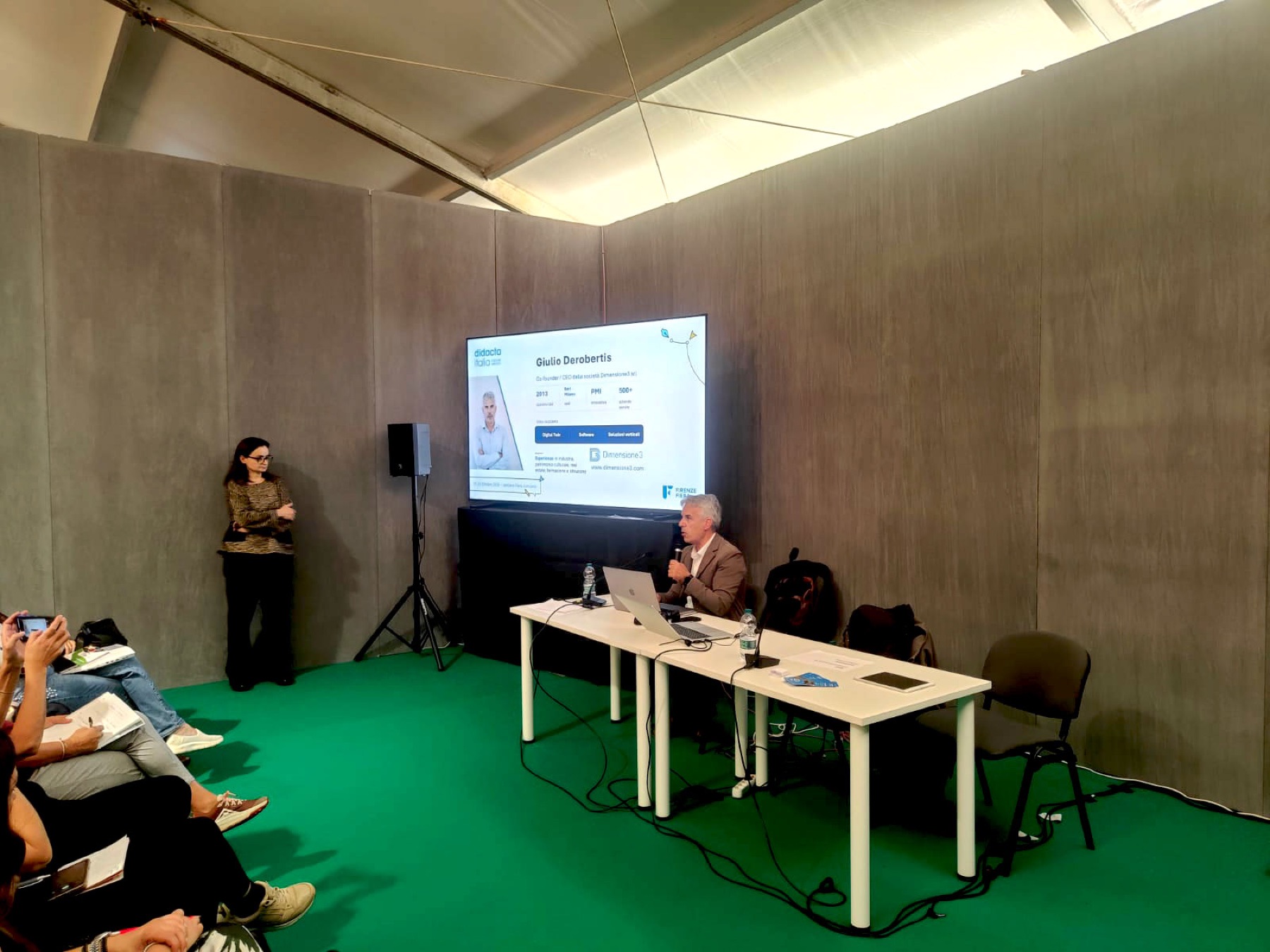
The Virgilio experience forms part of a broader collaboration between Dimensione3 and the education sector, which has also included digital heritage projects in Gravina in Puglia.
From industrial training to schools: one technology, new contexts
Dimensione3’s interest in education also stems from experience gained in other sectors. For years, the company has developed Digital Twin applications for industry, cultural heritage, real estate and other fields where connecting places and physical assets to information and digital content is important.
In industrial technical training, one recurring need is to bridge the gap between theoretical knowledge and the operating context. Manuals, procedures, documentation and learning materials contain essential information, but they often remain separate from the plants, machinery and components they describe.
To address this need, Dimensione3 developed TwinFor Training, an application that synchronises documents and Digital Twins, connecting theoretical content with the physical elements represented in the digital environment.
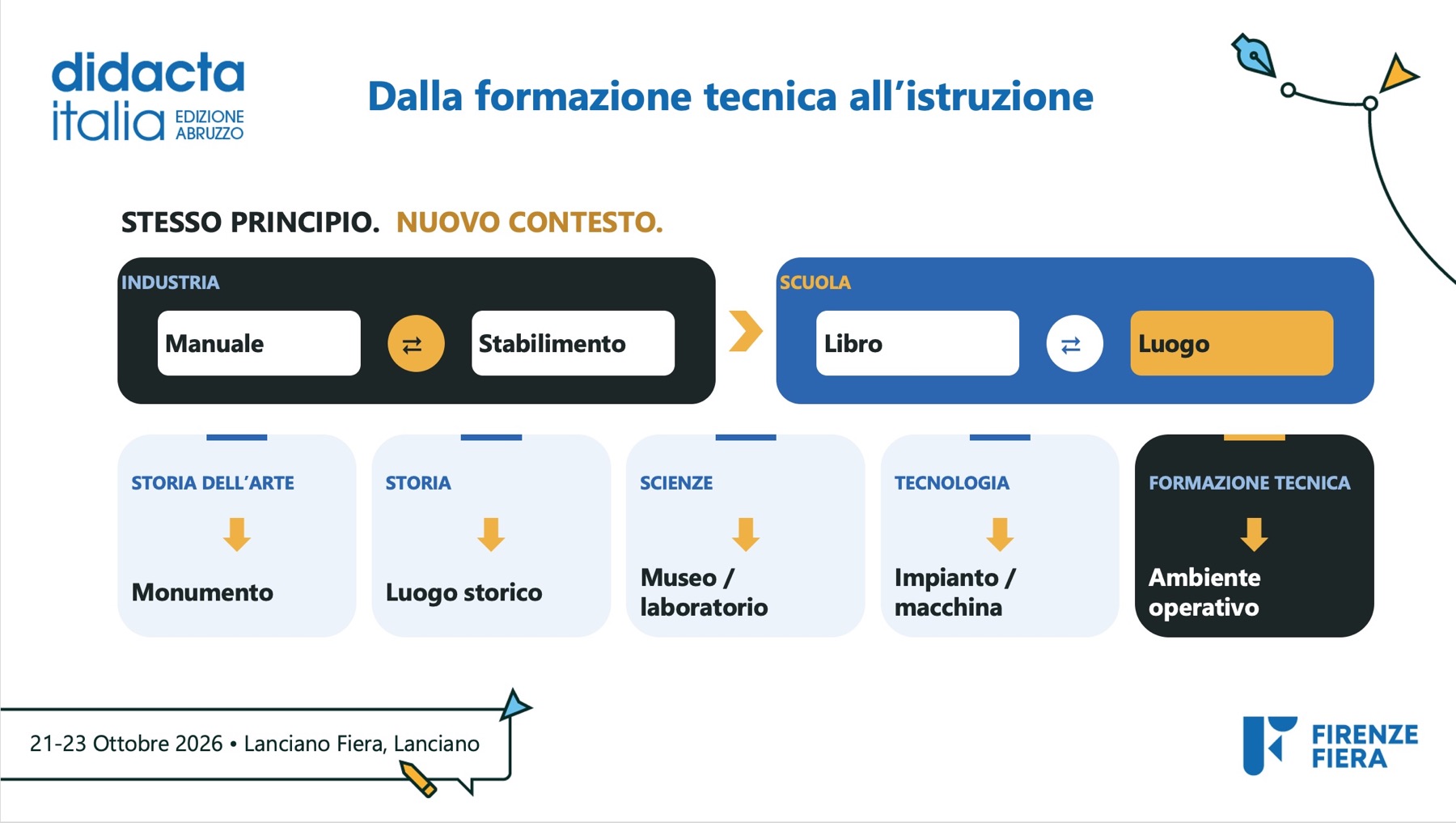
This experience led to a question: why not apply the same principle to school education?
What if places became part of textbooks?
At school, much knowledge is already available through books, handouts, PDFs, images, videos and other learning materials. Yet this content is often experienced separately from the places and objects it describes.
Consider the study of a monument, a historic building, a science museum or a technical laboratory. Traditionally, students read a text, look at images and, where possible, visit the place in person.
A Digital Twin adds a spatial dimension to this journey. By synchronising documents and digital environments, students can virtually explore a place and directly connect the information in their learning material to the spaces, objects or elements they are observing.
The link works in both directions: from a document, learners can reach the corresponding point in the Digital Twin; from the environment, they can access the relevant information. This does not replace books or existing teaching methods, but enriches them through context while preserving the value of available learning materials.
The Vatican Observatory: an example of contextual learning
During the Didacta seminar, an application of this model dedicated to the Vatican Observatory, the astronomical observatory of the Holy See, was presented.
The experience links a PDF document with the Digital Twin of the setting, making it possible to combine reading with virtual exploration. Students can observe the observatory’s spaces while consulting the corresponding information, moving from the three-dimensional representation to the document and back again.
The place becomes an integral part of consulting the content, providing a visual and spatial reference for the information in the text. The principle can be applied to many different contexts: science museums, historic sites, monuments, laboratories and other environments where understanding can be enriched by directly observing the relevant setting.
The Vatican Observatory example shows how a Digital Twin can evolve from a simple environment to visit into an interface for accessing knowledge.
Beyond cultural heritage: opportunities for technical schools
The use of Digital Twins in education is not limited to humanities or cultural heritage. For technical and vocational schools, and ITS Academy courses, the same approach can be applied to laboratories, machinery, plants, infrastructure and other operating environments.
A technical manual can be linked to the digital representation of a machine, a procedure to a component, or a safety data sheet to a specific work area. Students can explore environments and equipment remotely, observe the elements described in learning materials and become more familiar with the setting before accessing it in person.
This is where Dimensione3’s experience in industrial training can find continuity in the education sector.
Technology and education: a project to build together
For a Digital Twin to become an effective learning environment, technology alone is not enough. It requires a clear educational objective, a meaningful place, reliable content and design that enables students to participate actively.
A school may involve students in building the digital environment, assigning research, documentation, video, podcast, text and interactive-material production. Or it may use an environment that has already been digitised and enriched with documents and learning content, turning it into a resource for teachers and classes. The two approaches can naturally coexist.
Experiences with schools have also shown that visual, navigable and interactive languages can create new opportunities for attention and participation, including for students who are usually less engaged by traditional ways of working. This does not mean that technology automatically improves learning; it means recognising its potential when it is part of a well-defined educational project.
Towards knowledge that is increasingly connected to places
The experience shared at Didacta suggests a perspective that goes beyond a simple virtual tour. A Digital Twin can simultaneously be the outcome of a learning path created by students and an environment in which other students can learn.
On the one hand, building means researching, designing, collaborating and telling stories. On the other, exploring means observing, connecting information and gaining a deeper understanding of context.
For Dimensione3, this development is a natural extension of its work in digitising physical environments and creating applications that connect places, content and knowledge.
The underlying idea is simple: not to add technology to education for innovation’s sake, but to make the knowledge we already have more accessible and contextual. A place does not have to be something merely observed; it can become an integral part of how we learn.